
.svg)

.svg)
%203.svg)


Consumer AI Rewind: Stories, Companions, and the Rise of AI That Feels Persona
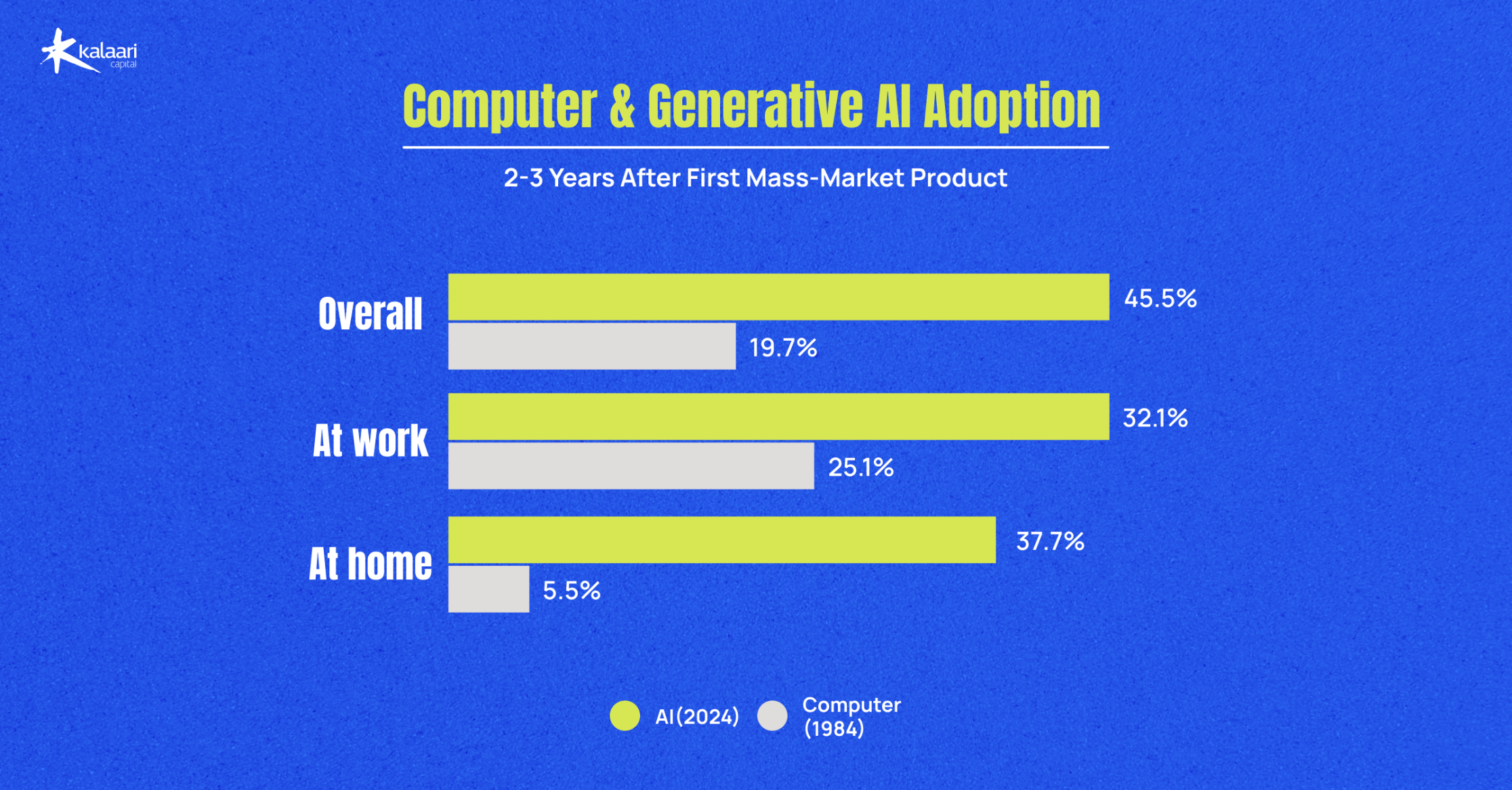
A lot has been said about consumer AI this year. One thing feels clear: we have finally entered the era of native AI consumer apps that actually makes life meaningfully better, not just theoretically cooler. AI has also been adopted far faster than the last truly transformational technology, the computer.
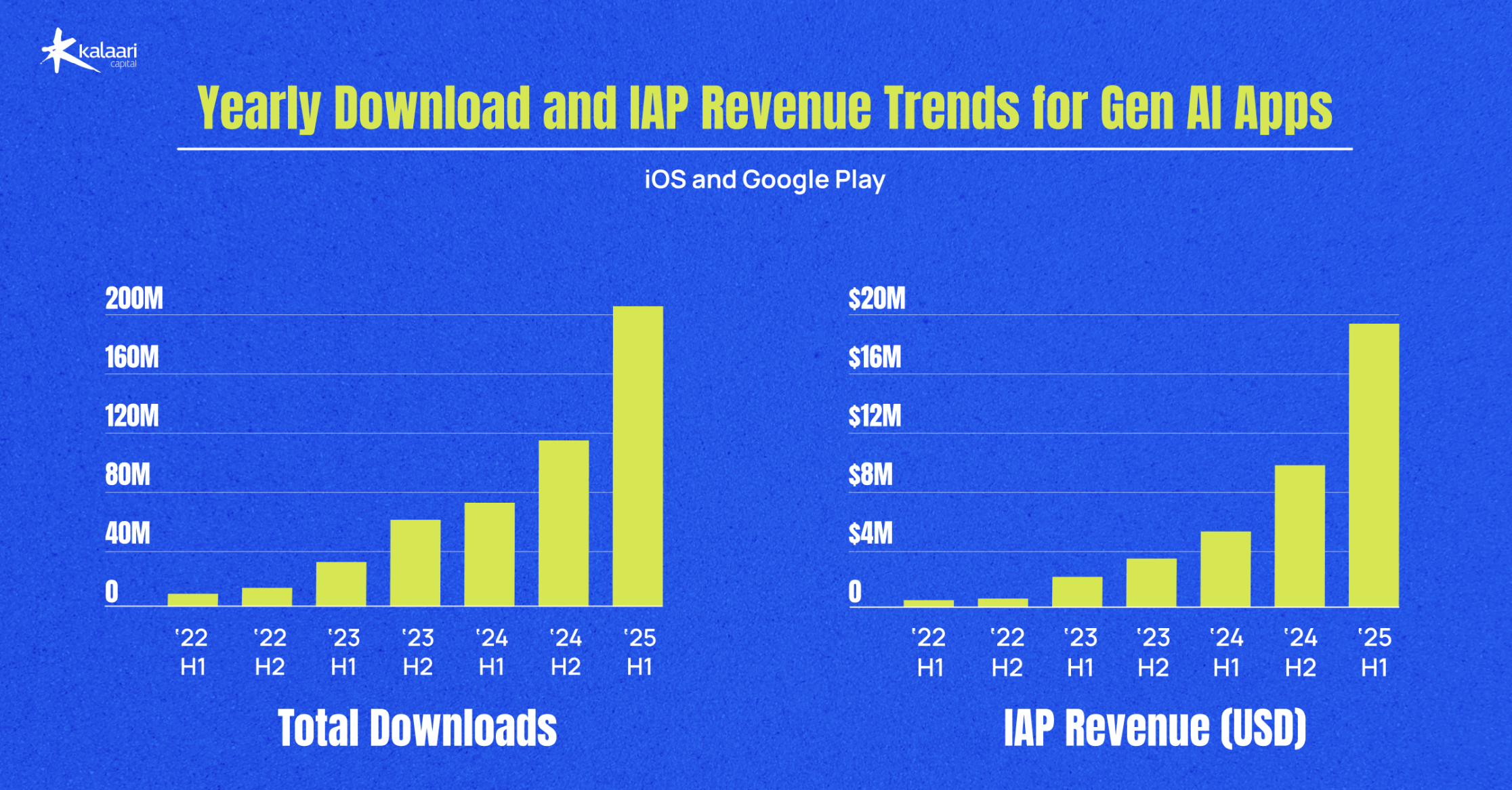
The growing role of AI in everyday workflows is now visible in the numbers. AI applications across India’s iOS and Play Store ecosystems have crossed 200 million downloads and generated more than $18 million in revenue in the first half of 2025.
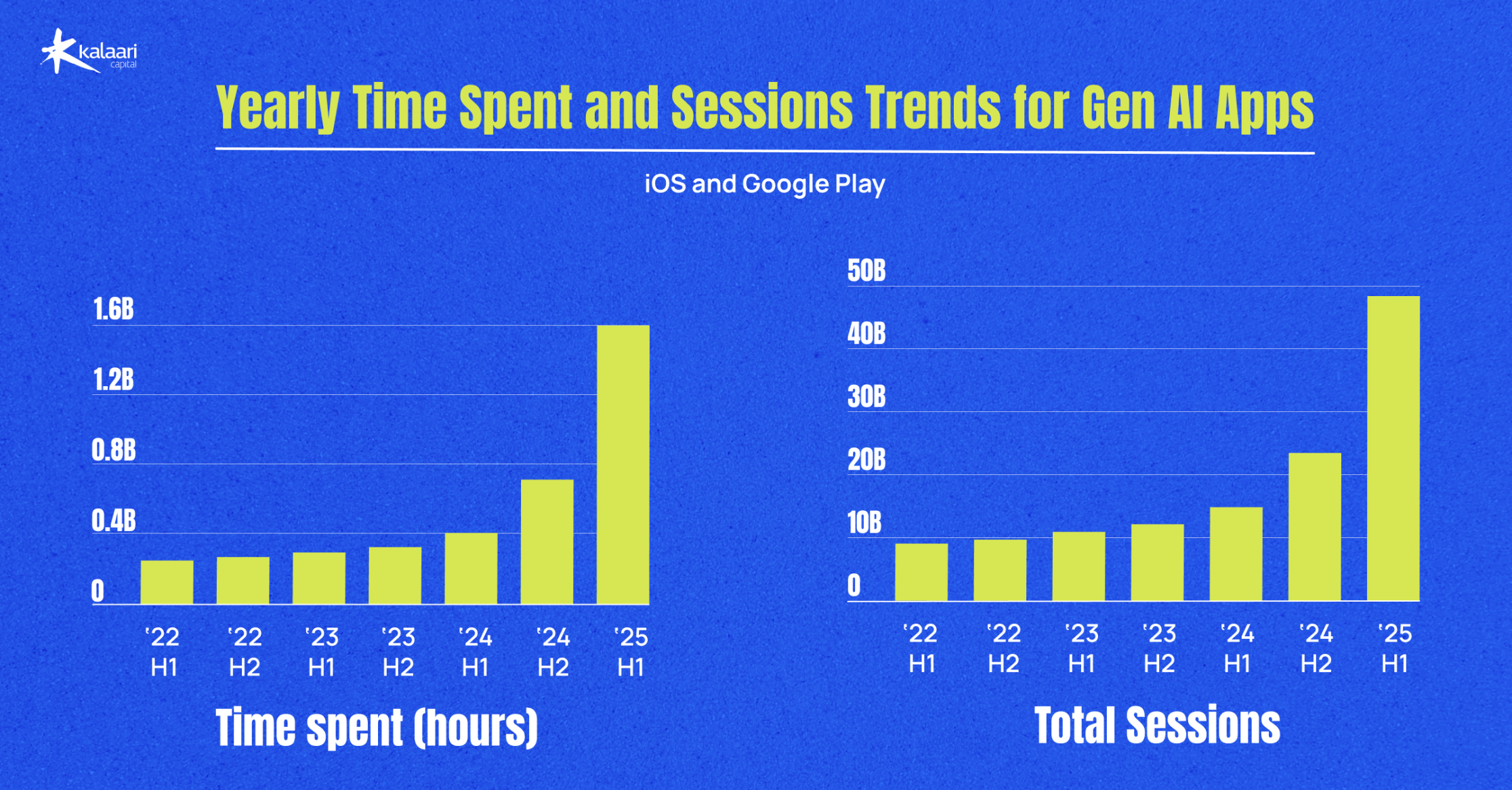
While individual products see mixed engagement, the aggregate behaviour is hard to ignore. Across India 1, 2 and 3, users have spent over 1.6 billion hours across nearly 50 billion sessions on generative AI applications on Android and iOS.
With early adoption already visible at scale, it feels like the right moment to take a clearer look at where consumer AI in India stands as it moves from curiosity to mainstream behaviour.
The New Unit of Productivity
This one is no brainer. AI has already delivered ~10–55% productivity improvements on specific knowledge-work tasks – be it one of the applications I talked about in the start or other tools people swear by such as granola for meeting notes, superhuman for emails, cursor for coding et al.
As is obvious from these examples, much of the early AI tooling has been built for the modern knowledge worker. The more interesting question is what time-saving and productivity-enhancing applications might look like beyond this narrow segment.
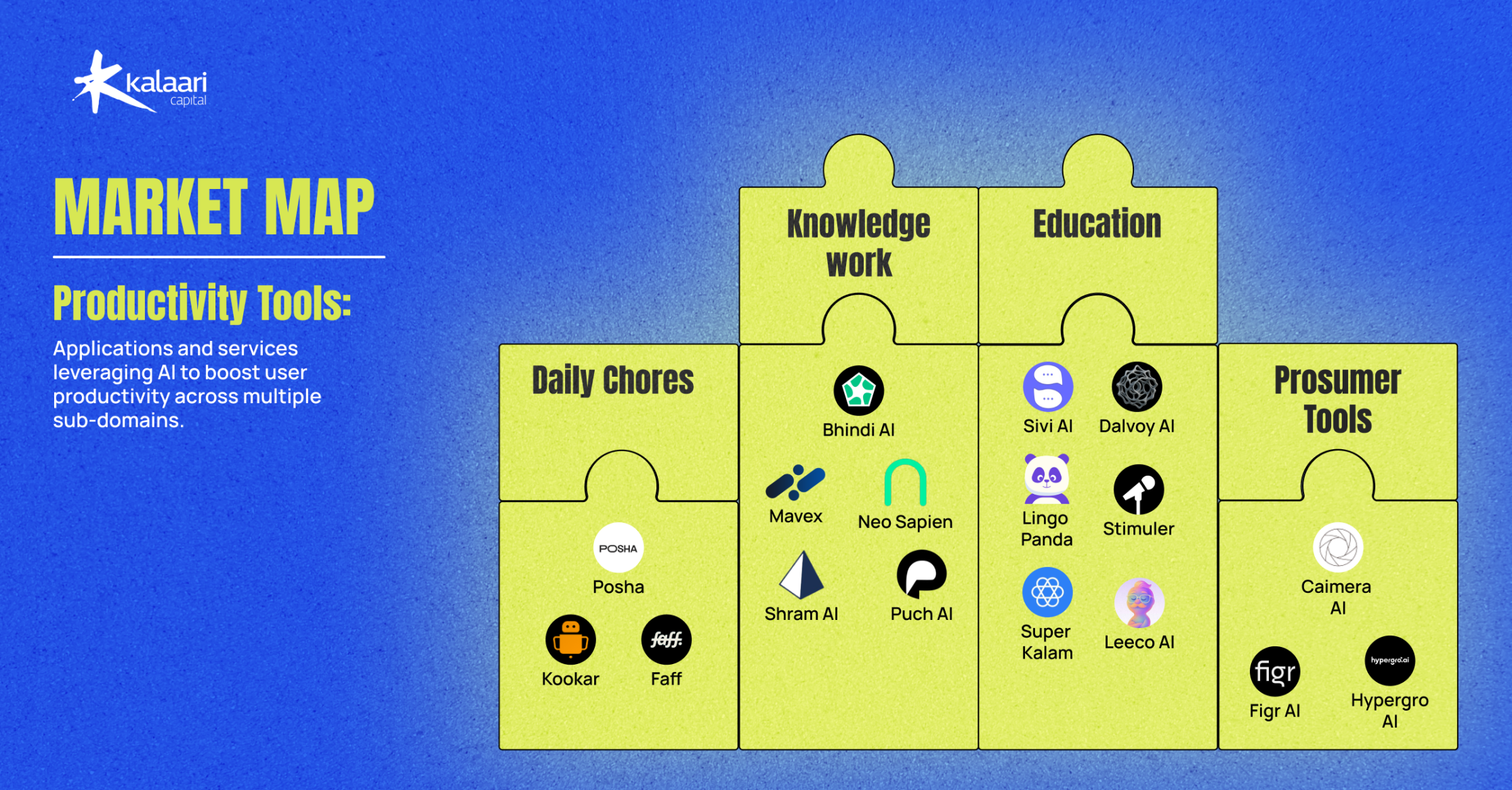
Consumer AI’s promise is straightforward. It should personalise itself to the individual and quietly take over the tasks that drain time and attention. That promise only holds when the tools are specialised enough to matter. Over the past year Indian startups have carved out a steady list of such focused use cases. Learning tools like Stimuler and LingoPanda, prosumer products like Figr and Caimera AI, note takers like neosapien and even early household chore applications from Faff, Kookr AI and Posha, which apply AI across software, hardware and small agentised tasks to handle the odd jobs that chip away at a person’s day.
The more time AI frees from low-value tasks, the more room individuals have for work that is creative, strategic or just, more human.
For 2026 we look forward to see applications that look to go deeper into these narrow bands of daily life where the friction sits. These could range from tools that make an MSME owner’s day meaningfully more productive to learning systems that act as live co-pilots for skill development, along with other specialised assistants built around the routines people struggle with most.
Stories With an Audience of One
Somewhere between GPT-3.5 and GPT-4, chatbots slipped past the practical version of the Turing test. The exact moment doesn’t matter. What matters is that we reached a point where language from a model could pass as language from a human. And once that threshold is crossed, a new frontier of entertainment opens.
Humans are entertained in more than one way. Sometimes it is the story. Sometimes it is the storyteller. We are now at a point where machines can plausibly fill both roles.
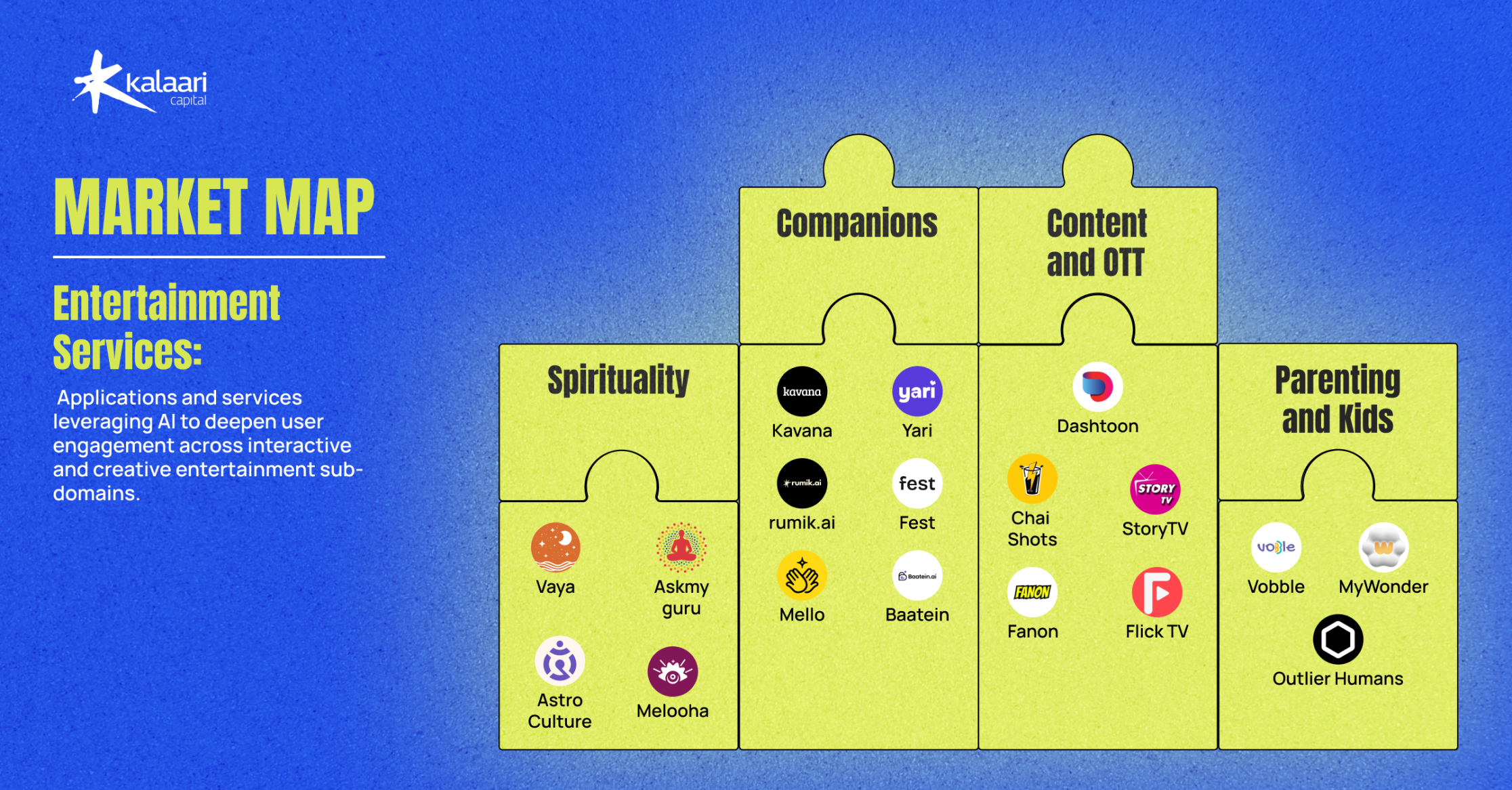
In India we are seeing the role of the storyteller unfold in real time. People lean in when a conversation gives them something interesting to respond to and the space to talk about themselves. That balance is what holds attention. Power users of certain companion chatbots now spend 120+mins in a single session, talking to a model that keeps them engaged through stories while quietly learning their preferences along the way. People reveal themselves on their own terms, not on command, and companion AIs benefit from this. They gather the small signals and preferences that surface naturally in conversation, and those details become the foundation for a far more personal experience. Startups like Rumik, Kavaana, Mello, Baatein and more are already working with this insight in mind, havening accumulated 1.2M cumulative downloads.
On the story front, AI is becoming more of an enhancer than a replacement. Whether it is audio, video or text, every piece of content sits on a long chain of small creative decisions and tools that have to line up for it to reach an audience. Today, AI tools cover more of that chain. These tools - Automatic language dubbing, frame-level editing, and even the ability to turn written fan fiction into interactive comics - give creators a kind of leverage they simply did not have before. Faster output is just the visible benefit. The deeper shift is the freedom to iterate, refine and push a story closer to the form the creator actually imagined.
Heading into 2026, the shift will be toward consumer entertainment across companions, games, OTT that go past traditional UI and experiences that respond to tone, context and past behaviour. And for creators, the field opens up even more. AI can now assist agnostic of the creative industry you are in with asset generation, sound designs, running early audience tests to predicting which ideas will resonate and test thumbnails, titles, story beat.
A Smarter Everyday
The first wave of the internet and mobile reshaped the Indian consumer’s lifestyle. Startups like Myntra and Flipkart changed how people shop, MakeMyTrip altered how they travel and platforms like Groww, PhonePe and PolicyBazaar shifted how they think about their finances.
AI brings the possibility to reimagine these routines from the ground up. It lets users interact with marketplaces in ways that were never available through text boxes or rule-based filters. Search got us this far, but what will take us further is the ability of platforms to read intent across modalities and anticipate what a user might want next. (We have already seen early versions of this in how TikTok and Instagram learned to personalise feeds with uncanny accuracy)
Incremental gains appear when platforms start shaping discovery rather than leaving it to chance. We are already seeing it in products like Shoppin and ALT Fashion, which are trying to reimagine how people explore fashion, and in Glide and Colnvent which are trying to simplify the process of deciding where to travel and what to do once you get there. Health is drifting in the same direction with tools like August attempting to make it easier for users to interpret lab reports, understand what matters to lead a healthier life.
Each of these moves takes a category that was once transactional and turns it into a more guided, personal and intuitive experience
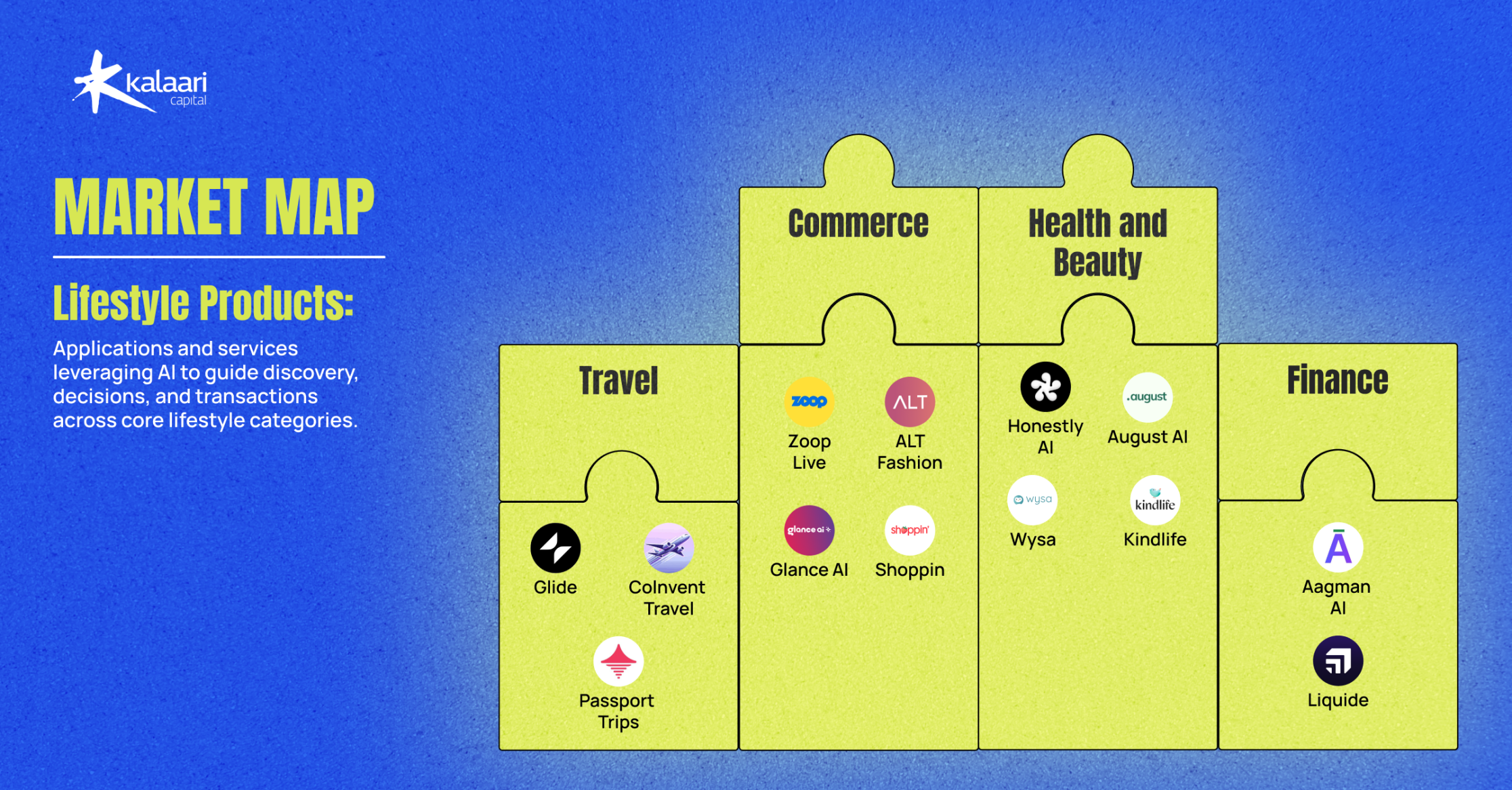
What we are excited in 2026 is for platforms to quietly take over the boring parts: finding the right keywords, narrowing down choices, comparing options, completing the transaction all based on a particular users history preferences and context. These are the frictions that used to define the experience. When the backgound work is handled for you, the decisions become more informed and far easier to move through. If you’re building consumer AI products that are becoming part of daily life in India, we’d love to connect. Reach out to us at consumer@kalaari.com.


.svg)

.svg)

More
BLOGS
.png)